
Short answer: A tap timer for a garden hose can make a simple watering routine easier while you are away, provided the whole installation is checked first. The Hosetimer product has two independent outlets, separate timing controls, a 1-240 minute duration range and a rain-delay option. It also supports manual watering and needs two AA batteries, not included. The timer does not tell you how much water each plant needs or prove that a hose and tap combination will deliver a particular flow. Treat pressure, coverage, compatibility and plant effects as manufacturer does not specify until your own setup has been tested.
Know what a tap timer controls
A tap timer automates opening and closing; it does not design the irrigation system downstream. The current listing provides two independent outlets and separate schedule fields, which can help split a patio line from a border line. The amount delivered still depends on the water source and the connected device.
That distinction matters when you are leaving for a weekend or a longer holiday. A display can show a valid programme while a kinked hose, loose coupling or unsuitable sprinkler leaves one area dry. Treat the first run as a system check rather than a formality.
| Timer feature | Listed detail | Installation question |
|---|---|---|
| Outlets | Two independent valves | Which watering group belongs on each? |
| Duration | 1-240 minutes | How long does the connected device need? |
| Frequency | Every 4, 6 or 12 hours or every 1-15 days | Does that fit the weather and plants? |
| Delay | 0, 24, 48 or 72 hours | Will skipping be safe for the plants? |
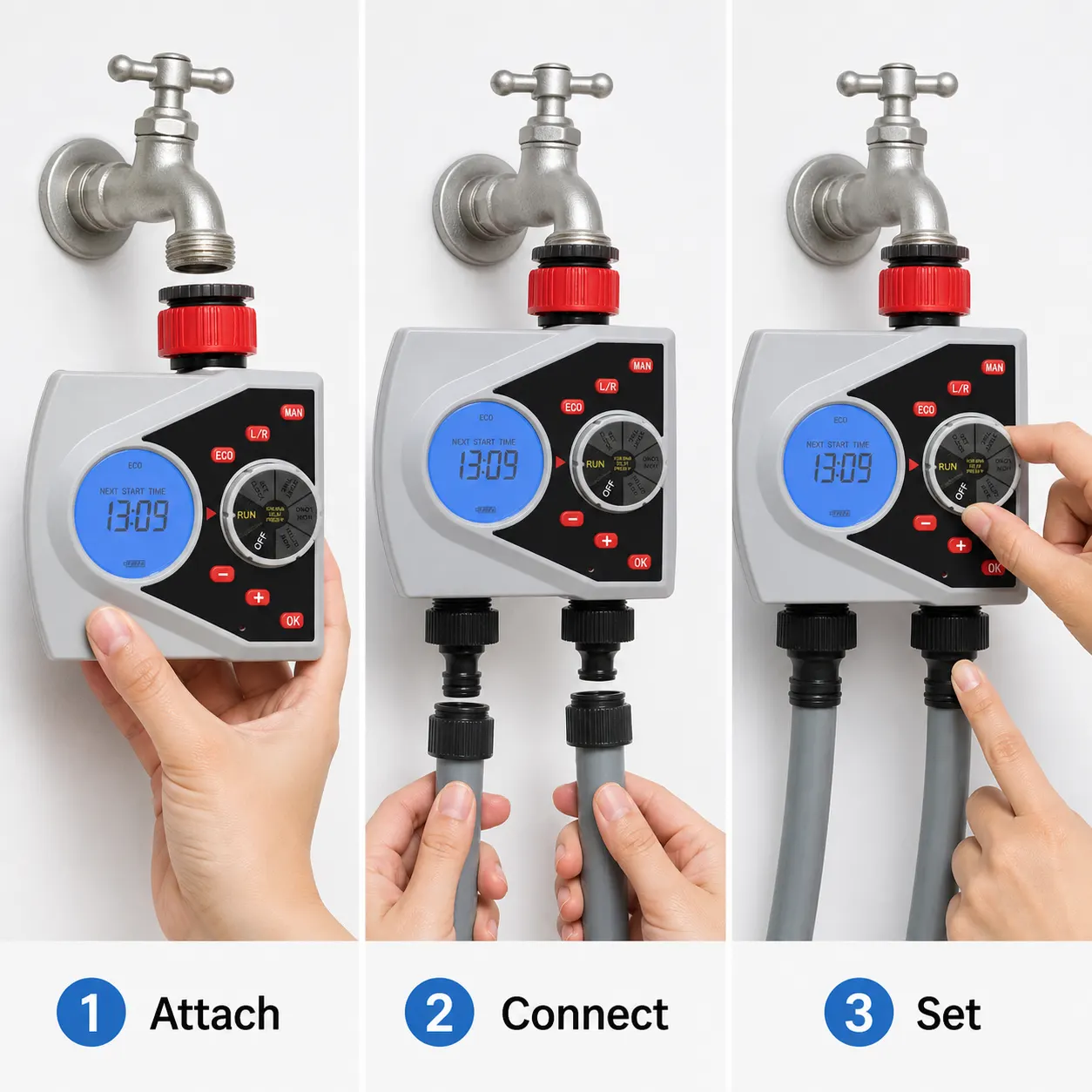
Connect and test before departure
The listing describes a swivel coupling intended for easy, tool-free installation. Easy connection is not the same as universal compatibility, so compare the tap, washer, hose and downstream fittings you actually own. The product page does not publish a universal tap-thread list.
Use both outlets only after checking their separate routes. If one line feeds small pots and the other feeds a larger device, do not assume a shared duration will wet both areas equally. Adjust the schedules after observing the result.
- Fit two AA batteries and confirm the timer clock.
- Connect the timer to the tap and check the seal by hand.
- Attach each hose or watering device to its intended outlet.
- Run each outlet manually and inspect the wetting pattern.
- Set the schedule, then repeat a short observation before you leave.
Use rain delay with context
The product lists a rain-delay function with 0, 24, 48 or 72 hour options. That can be convenient when natural rainfall changes the plan, but a delayed cycle is still a decision about the plants. Containers, hanging baskets and exposed pots can dry faster than sheltered ground.
RHS guidance recommends checking container moisture and using arrangements suited to the plants and the length of the holiday. The timer can follow a schedule, but it cannot measure the moisture in every pot or identify whether a plant is already stressed.
Set honest purchase limits
The Hosetimer is a reasonable match for a UK gardener who wants two timed hose outlets, manual watering and a programmable rain delay. It is not a documented pump, pressure regulator or measured irrigation design.
Manufacturer does not specify flow rate, pressure range, hose reach, coverage, tap-thread compatibility or plant-specific results. If any of those decide whether your garden will be watered safely, verify them with the actual installation before relying on the product.
Related guides and product details
Buy the tap timer when its two-outlet scheduling matches your tested hose layout, and leave coverage and plant care to the installation checks the timer cannot perform. Read Watering Garden Pots While on Holiday in the UK for related guidance. Read Garden Hose Timer for Holiday Watering: UK Checks for related guidance. Review the documented specification on the Garden water hose tap timer with two outlets product page before ordering.
Sources and safety context
- Supports the outlet count, timing controls, rain delay, manual function, battery requirement and coupling description. Current Hosetimer product page.
- Supports the need to judge container moisture and consider self-watering arrangements when away. RHS: How to water containers.